
Written by: Nico Jay Dauz, CHRA
Clinically Reviewed by: Daniel Gunn, PG Dip, CCTP II
Have you ever felt a memory so heavy it cannot be spoken? Trauma often lodges in the mind and body in ways that make words feel useless. Flashbacks, unexplained anxiety or intense emotions can make it seem impossible to move forward.
Yet there is another way to begin untangling that weight: trauma healing through creativity. Writing, painting, music, and movement help us express what words cannot, allowing emotions and memories to be processed in a safe and meaningful way.
In this article, we will explore how creativity supports trauma healing, why it works, and practical ways to use it in recovery.
Think of the brain as a busy office. Every memory and feeling has a folder. Trauma is like a sudden fire. Folders get burned, scattered, or stuck together, making it hard to find the correct information. That is why traumatic memories often feel fragmented or overwhelming.
Different “departments” handle specific tasks. The amygdala is the office alarm, constantly scanning for danger and often overreacting after trauma. The hippocampus is the filing clerk, trying to organise memories, but trauma can jumble them, causing flashbacks or confusion. The prefrontal cortex is the manager, responsible for planning and self-control, but trauma can make it struggle to keep order.
When the office is in chaos, trauma can affect many parts of your mind and body:
Emotional effects: sudden anxiety, irritability, mood swings, emotional numbness, or difficulty connecting with others. You might feel constantly on edge, overwhelmed by feelings that seem out of nowhere.
Cognitive effects: trouble concentrating, memory gaps, intrusive thoughts, or a sense of disorientation. It can feel like your brain is full of scattered files you cannot locate when needed.
Physical effects include muscle tension, headaches, digestive issues, chronic fatigue, and increased startle responses. The body retains trauma memories even when the mind finds it hard to process them.
Behavioural effects include avoiding reminders of trauma, social withdrawal, difficulty trusting others, and engaging in risky behaviours. Office staff react to ongoing alarms to safeguard the office from further damage.
Healing from trauma does not mean forgetting what happened or pretending it was insignificant. Trauma leaves an imprint on the brain, body, and emotions, and healing involves learning to live with the memory so it no longer controls your life.
Think of it as restoring the brain’s office after a fire. The aim isn’t to erase all files but to organise, repair damaged areas, and restore safety systems so the office can operate smoothly again.
Trauma healing occurs on multiple levels:
Emotional healing involves recognising, experiencing, and managing emotions safely. People often begin by identifying triggers, understanding emotional responses, and gradually tolerating once-overwhelming feelings.
Cognitive healing: Trauma can distort thoughts, beliefs, and memories. Healing helps people process these memories, reframe negative beliefs about themselves or the world, and regain clarity in thinking.
Physical healing: Trauma can lodge in the body as tension, pain, or heightened stress responses. Healing involves releasing these stored physical reactions through movement, relaxation, or body-based therapies.
Behavioural healing: Trauma often changes behaviours, leading to avoidance, withdrawal, or hypervigilance. Healing encourages gradually re-engaging with life, building trust, and creating healthier habits.
Healing is not linear. There are setbacks, difficult days, and moments when memories feel overwhelming again. But with support, safe environments, and intentional practices, people can rebuild emotional regulation, strengthen resilience, and regain control over their lives.
At its core, trauma healing through creativity by using art, writing, and music for emotional expression is about putting the pieces back together. It means bringing your memories, emotions, and body sensations into balance so you can live fully again, even with the memories of what happened.
Trauma often lodges in parts of the brain and body that words alone cannot reach. Creativity bridges these areas, helping people process feelings, memories, and sensations safely and meaningfully.
Accessing Non-Verbal Parts of the Brain
Trauma can overwhelm the parts of the brain responsible for language and rational thought. Creative activities like painting, writing, or music allow expression without words, allowing the brain to release and organise emotions that might otherwise remain stuck.
Emotional Regulation
Engaging in creative practices can calm the brain’s overactive “alarm system.” For example, playing music or drawing can reduce anxiety and help manage intense emotions. The brain learns that feelings can be expressed safely, building emotional resilience.
Restoring Control and Agency
Trauma often leaves people feeling powerless. Creativity gives a sense of choice and control: you decide what to create and how to do it. This can deeply empower and rebuild a sense of personal agency that trauma may have taken away.
Integration of Mind and Body
Creative practices engage the senses and the body, helping integrate emotional, cognitive, and physical experiences. Movement, dance, or music therapy connects body sensations with emotions, which supports your trauma healing through creativity.
Engaging in creative activities significantly enhances the brain’s capacity to forge new connections, a remarkable process known as neuroplasticity. It allows the brain to reorganise itself, creating healthier patterns for thinking, feeling, and reacting. Essentially, creativity helps “rewire” the brain to recover from trauma.
In short, creativity works because it simultaneously engages the brain, body, and emotions. It provides safe ways to express what is hard to put into words, helps regulate intense feelings, restores a sense of control, and rewires the brain for healing.
Trauma can feel like it’s stuck in your mind and body, making it hard to process through words alone. Memories may feel fragmented, emotions overwhelming, and your body may carry tension long after the event. Creativity offers a way to reach those parts of yourself that traditional talk therapy sometimes cannot.
Activities like drawing, painting, writing, music, or movement allow you to express feelings safely and explore experiences in a non-verbal way. This is not just a hobby. Many research studies show it has measurable benefits for trauma survivors.
Creative therapies are showing substantial promise in supporting trauma recovery. Trauma-Focused Art Therapy (TFAT) helps individuals express themselves, manage emotions, reduce trauma-related symptoms, and build resilience and self-confidence. Both patients and therapists report positive experiences, highlighting the power of structured creative approaches in healing.
Music therapy has also been studied for PTSD. Research shows it can reduce trauma symptoms while supporting emotional expression and coping, making it another practical, creative approach to trauma healing.
Written Exposure Therapy (WET) is a structured, writing-based treatment for PTSD. Studies show that patients who receive WET often experience significant symptom reduction, with many no longer meeting PTSD criteria after treatment. These benefits can last up to a year. WET is as effective as Cognitive Processing Therapy and Prolonged Exposure, although it requires fewer sessions. Dropout rates are lower with WET, and its effectiveness appears consistent across patient characteristics.
Overall, research on creative art therapies, such as art, music, dance/movement, drama, and expressive arts therapy, has shown that they significantly enhance adult psychosocial outcomes.
By embracing creativity, trauma survivors can find a path to healing and a way to reclaim their voice, body, and life.
Even small creative practices can support trauma recovery. Regularly and safely engaging in activities that allow expression, release, and self-reflection can help you process trauma meaningfully. Below are detailed approaches, each treated as its own standalone method.
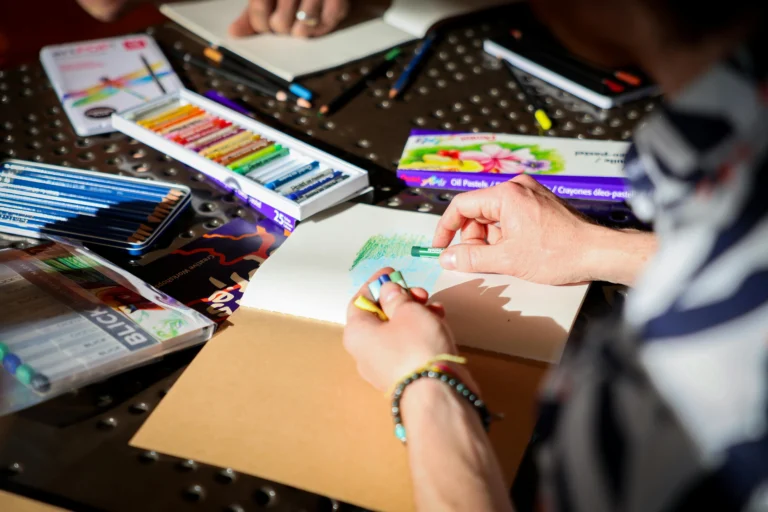
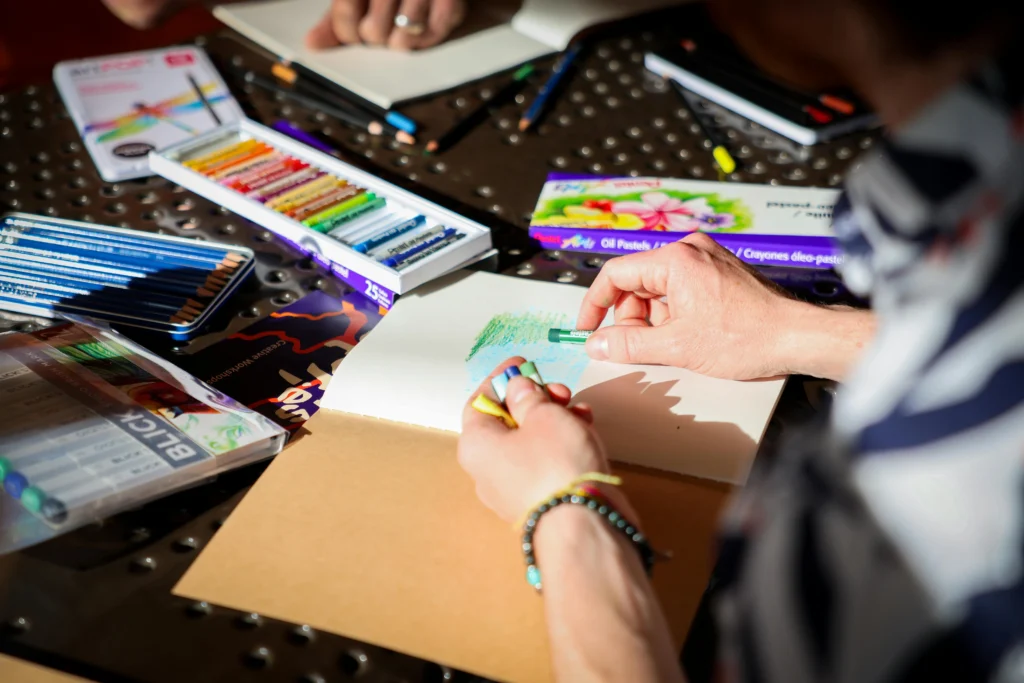
Art allows emotions and experiences to be externalised visually. When words feel insufficient, drawing or painting gives the mind and body a safe outlet for feelings that may feel overwhelming or stuck.
Keep a sketchbook: Treat it as a private space for self-expression. Patterns in colours, shapes, or recurring themes can reveal hidden feelings or unresolved emotions.
Use colours and shapes freely: Trauma can create discouragement discouraging self-expression. Ignoring skill or aesthetics allows the mind to explore emotion without pressure or judgment.
Guided prompts: Exercises such as “Draw how your body feels today” or “Visualise a safe space” help you connect physical sensations with emotions. Over time, this strengthens the brain-body connection and supports emotional integration.
Why it helps: Drawing externalises internal experiences, reduces emotional intensity, and supports self-awareness.
Writing offers structure to fragmented memories and challenging experiences. Expressive writing clarifies thoughts, reduces emotional intensity, and helps make sense of trauma.
Daily writing: Spending 10–15 minutes daily is sufficient to notice improvements in mood and clarity. Consistency matters more than duration.
Structured exercises: Writing a letter to your younger self or narrating a past traumatic event in a safe and controlled way fosters self-compassion and reframes experiences.
Organising memories: Putting fragmented memories into words creates a coherent narrative, which reduces intrusive thoughts and emotional overwhelm.
Why it helps: Writing simultaneously engages the rational and emotional parts of the brain. Structured writing therapies, like Written Exposure Therapy (WET), have been shown to reduce PTSD symptoms and support long-term recovery significantly.
Music engages multiple brain areas, influencing emotion, cognition, and physiological arousal. It offers a safe channel for expression and emotional release.
Listening with intention: Select music that reflects or shifts your current mood. Matching feelings with music can validate emotions, while uplifting music can create a sense of relief and grounding.
Playing or singing: Using instruments or voice provides physical and emotional release, helping to reconnect with suppressed emotions.
Rhythmic activities: Drumming, clapping, or tapping to a beat can regulate the nervous system and reduce hyperarousal, creating a grounding effect.
Why it helps: Music therapy has been shown to reduce PTSD symptoms, improve mood, and enhance emotional coping in trauma survivors.
Trauma often manifests physically, leaving tension, restlessness, or discomfort in the body. Movement-based activities reconnect you with bodily sensations and promote emotional release.
Gentle movement: Yoga, stretching, or mindful walking helps release stored tension safely and gradually.
Dance and rhythm: Moving freely to music allows emotional catharsis, letting feelings move through the body instead of remaining trapped.
Mindful connection: Pay attention to how your body feels during movement, noticing areas of tension or ease. This strengthens mind-body integration, central to trauma recovery.
Why it helps: Movement supports emotional release, improves regulation of the nervous system, and promotes reconnection with the body, aiding overall trauma healing.
Drama allows emotions to be externalised through action and storytelling, creating a safe space for processing experiences.
Roleplay and improvisation: Acting out feelings or scenarios in a controlled environment provides an outlet for emotions and helps process experiences without internalising them.
Storytelling exercises: Creating characters or sharing stories can organise experiences and provide a sense of control. In group settings, it can foster trust and empathy.
Why it helps: Drama engages emotional and cognitive processing, giving structure to experiences while providing a safe space for expression. It can also enhance social connections and reduce isolation in trauma survivors.
The therapeutic benefit of creativity increases with regular practice and mindful reflection.
Set aside short periods: Even 10–20 minutes daily is effective. Regular engagement reinforces coping skills and creates new neural pathways.
Reflect on experiences: After creative activities, notice changes in mood, tension, or thoughts. Reflection enhances self-awareness and integration.
Focus on self-expression, not perfection: The purpose of creative practice is expression and processing, not skill. Accept imperfections and embrace the process.
Why it helps: Regular, intentional creative practice strengthens emotional regulation, increases self-awareness, and fosters resilience in trauma survivors.
Not every creative activity suits everyone. Trauma is personal, so experiment safely and notice what resonates with you.
Start with Safety
Begin with low-stakes activities like a quick sketch, brief journaling, or calming music. Avoid anything that triggers overwhelming emotions.
Consider Your Preferences
Notice Your Responses
Pay attention to how your mind and body react. Does drawing relieve tension? Does movement ground you? Does music shift your mood?
Mix and Match
Combine activities to engage different parts of the brain and body. Variety can deepen healing.
Trust the Process
Healing is gradual. Some sessions will feel powerful, others challenging. Consistent, mindful engagement builds benefits over time.
Creative practices support healing, but professional help is needed if you experience:
Therapists can guide creative practices safely, help process emotions, and teach coping strategies. Seeking help is a sign of strength. You do not have to face trauma alone.
Trauma does not have to define your life.
Creativity can be a powerful tool to process emotions, reconnect with your body, and regain control.
At helpmindbody.com, we provide resources, guidance, and support to help you explore creative practices safely and effectively.
Start today. Visit helpmindbody.com to access tools, tips, and professional guidance that can help you on your path to healing.
Text Sample

He is a graduate of the Bachelor of Science in Psychology at Cavite State University – Silang Campus, Cavite, Philippines. He is also a Certified Human Resources Associate and a Career Service Professional Eligible in the Philippines.

Clinically reviewed by:
Written by:
Clinically reviewed by:
Written by:
Clinically reviewed by:
Written by:

Clinically reviewed by:
Written by:
Clinically reviewed by:
Written by:
Clinically reviewed by:
Written by:
Clinically reviewed by:
Written by:
Clinically reviewed by:
Written by:

Clinically reviewed by:
Written by: